Partnership tax in one system, from PBC workpapers to K-1s.
Meet Cade.
Your in-house preparer, guide, and reviewer.
ARTICLE IV
ALLOCATIONS
4.1 Capital Accounts. A separate Capital Account shall be maintained for each Partner in accordance with Treasury Regulations Section 1.704-1(b)(2)(iv).
4.2 Allocations of Net Income and Net Loss. After giving effect to the special allocations in Section 4.3, Net Income and Net Loss for each Fiscal Year shall be allocated among the Partners so that each Partner's Capital Account equals, as nearly as possible, the amount that Partner would receive if the Partnership sold its assets at book value and distributed the proceeds under Section 5.1.
4.3 Regulatory Allocations. Notwithstanding Section 4.2, a qualified income offset and a minimum gain chargeback shall apply, each as defined in Treasury Regulations Sections 1.704-1(b)(2)(ii)(d) and 1.704-2(f).
4.4 Allocations Upon Transfer. If any Partnership interest is transferred during a Fiscal Year, items shall be allocated between the transferor and transferee using the interim closing of the books method.
§4.2 §4.3ARTICLE V
DISTRIBUTIONS
5.1 Distributable Cash. Distributable Cash shall be distributed at such times as the General Partner determines, in the following order of priority:
(a) First, to the Partners in proportion to their Capital Contributions until each Partner has received an 8% Preferred Return, compounded annually, on its Unreturned Capital;
(b) Second, to the Partners pro rata until each Partner's Unreturned Capital is reduced to zero; and
(c) Thereafter, 80% to the Partners in proportion to their Percentage Interests and 20% to Meridian Fund LP.
5.2 Tax Distributions. The General Partner may distribute to each Partner an amount intended to cover taxes on income allocated to that Partner, treated as an advance against Section 5.1.
§5.1(a) §5.1(b) §5.1(c)Depreciation up 41% vs. prior year, confirm the drivers.
Are we missing any M-1s this year? Last year had a prepaid insurance adjustment.
Guaranteed payments: confirm nothing changed from prior years.
The platform, step by step.
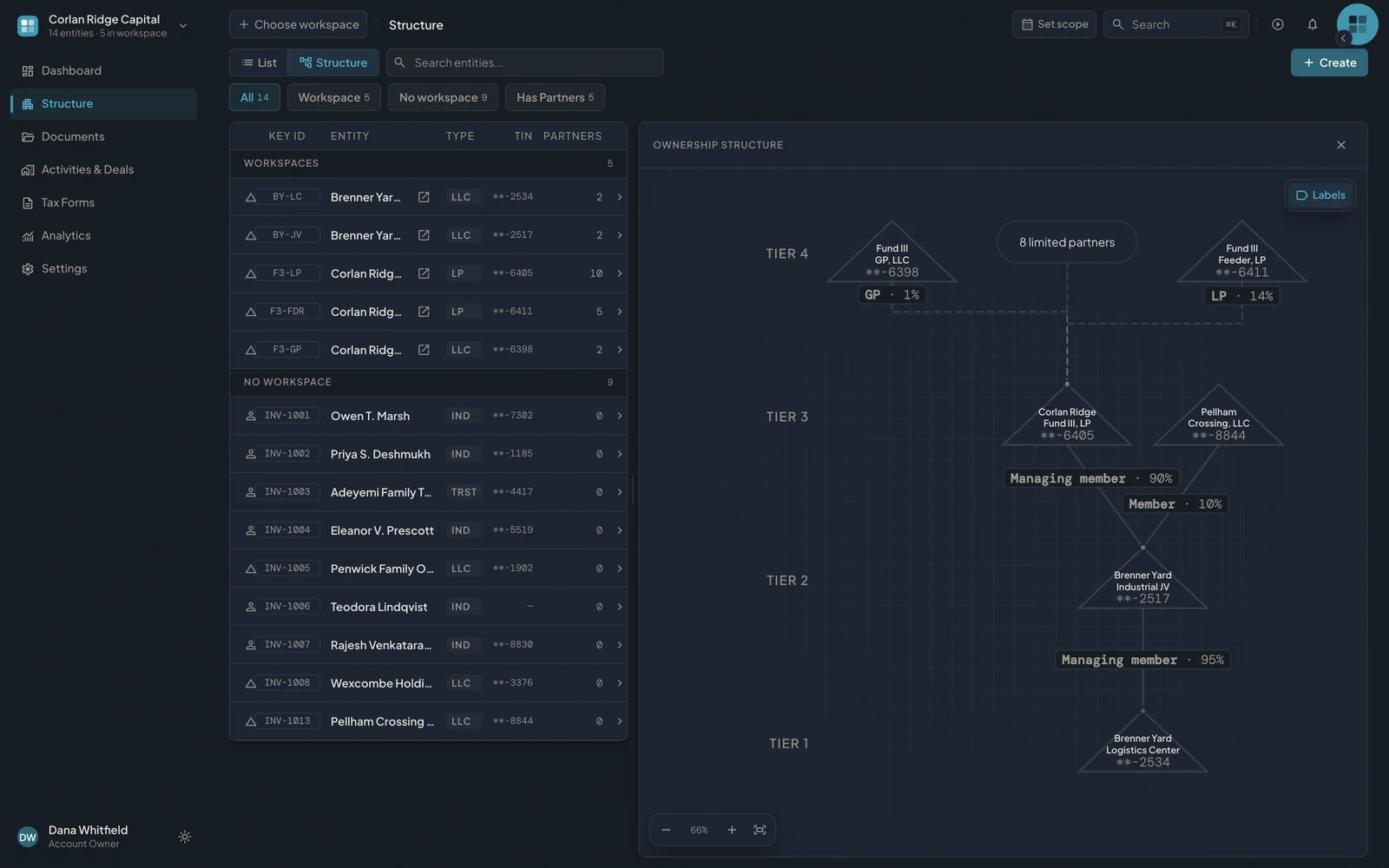
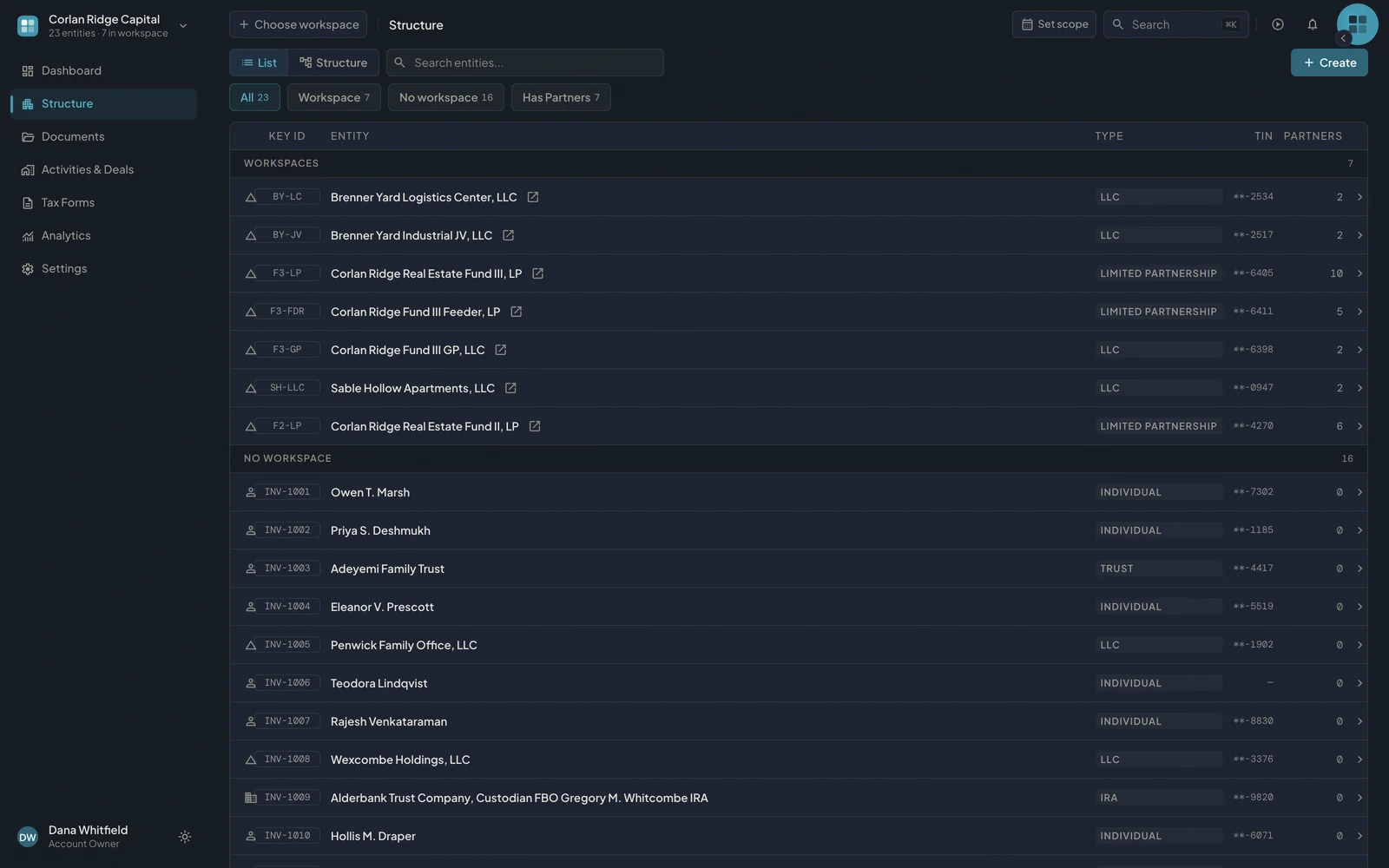
Your whole structure, one source of truth
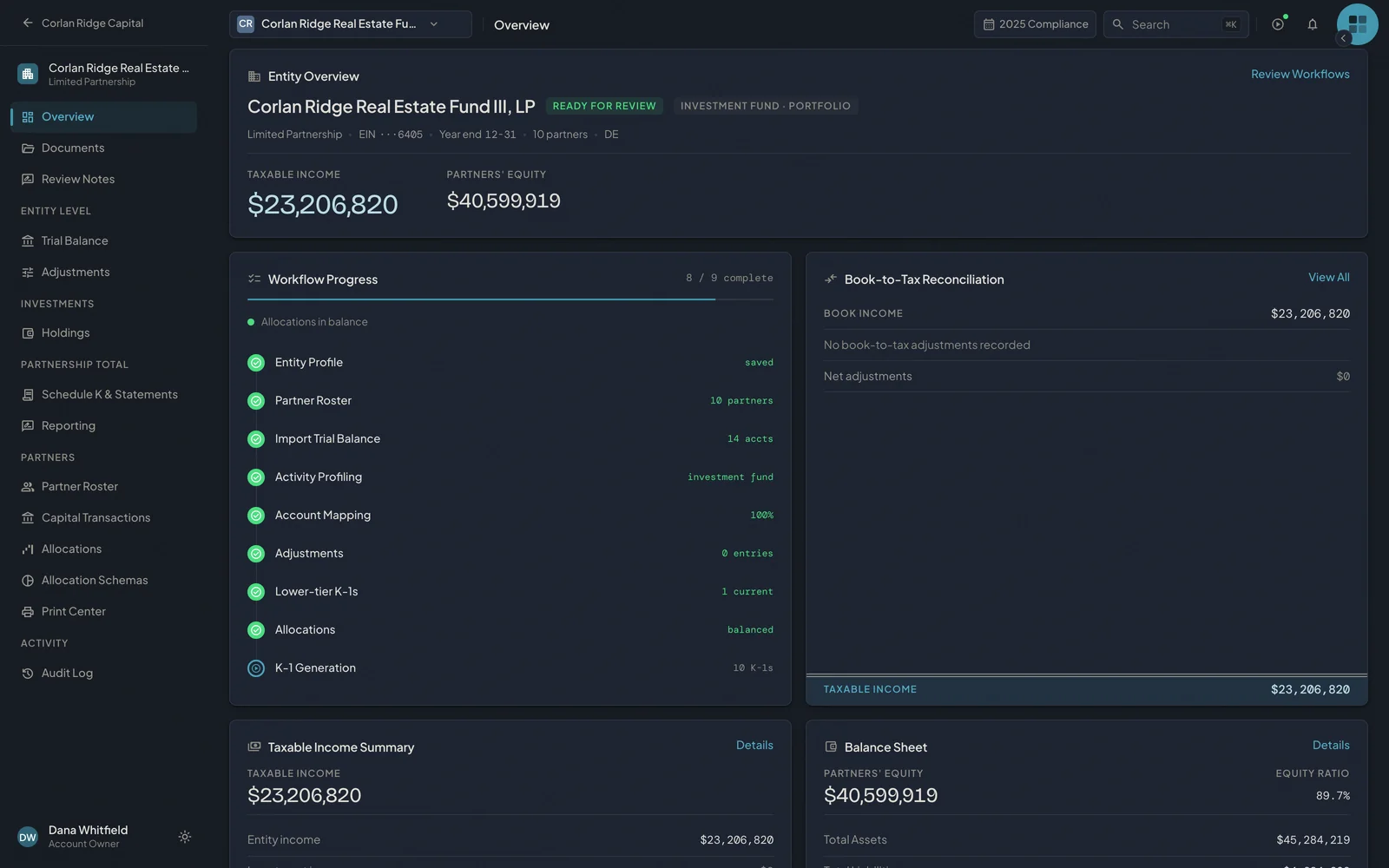
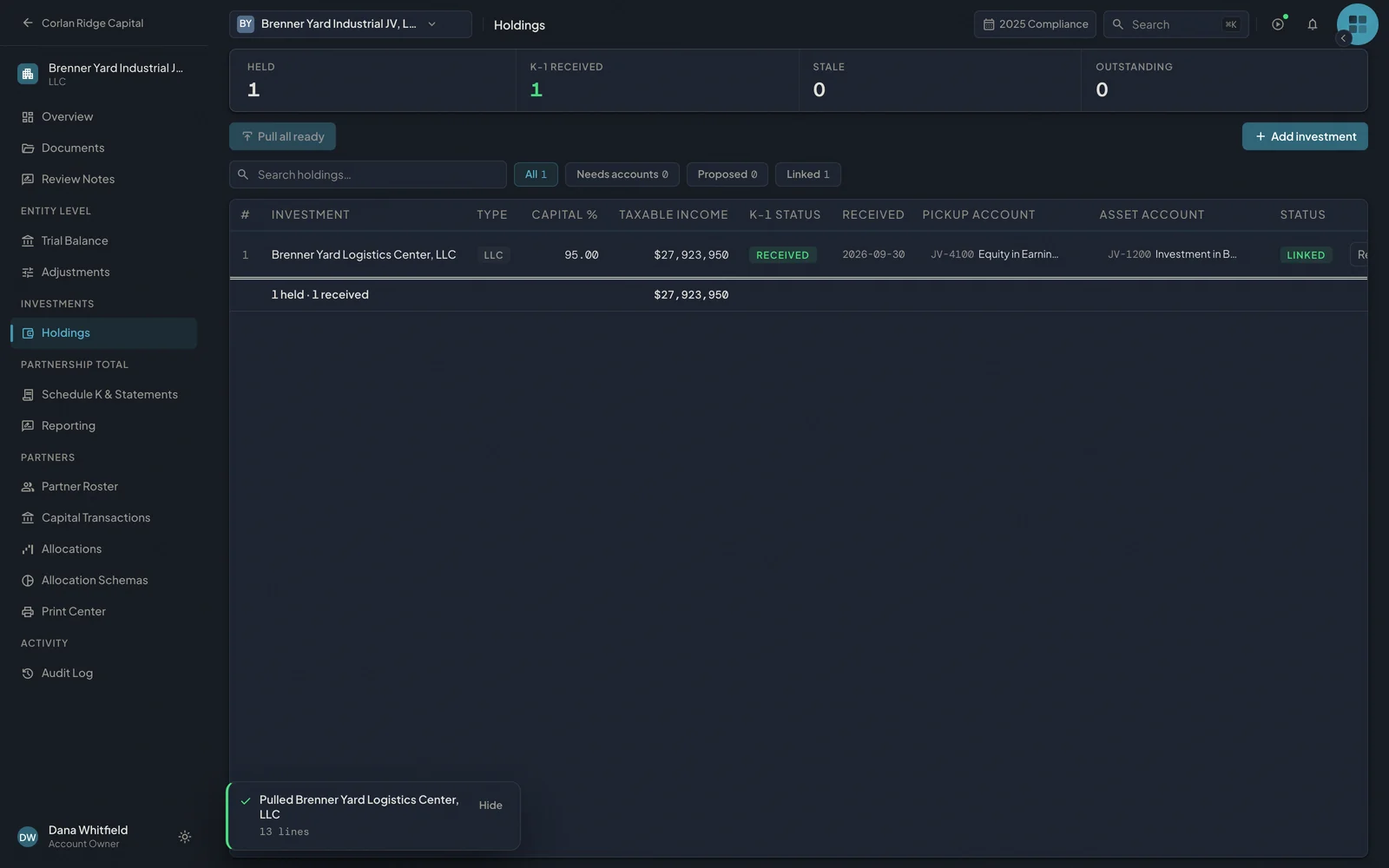
Set up each entity, investor, and ownership structure once. Cascade draws the organization chart from database records. When an investor's details change, every fund they are in picks up the change.
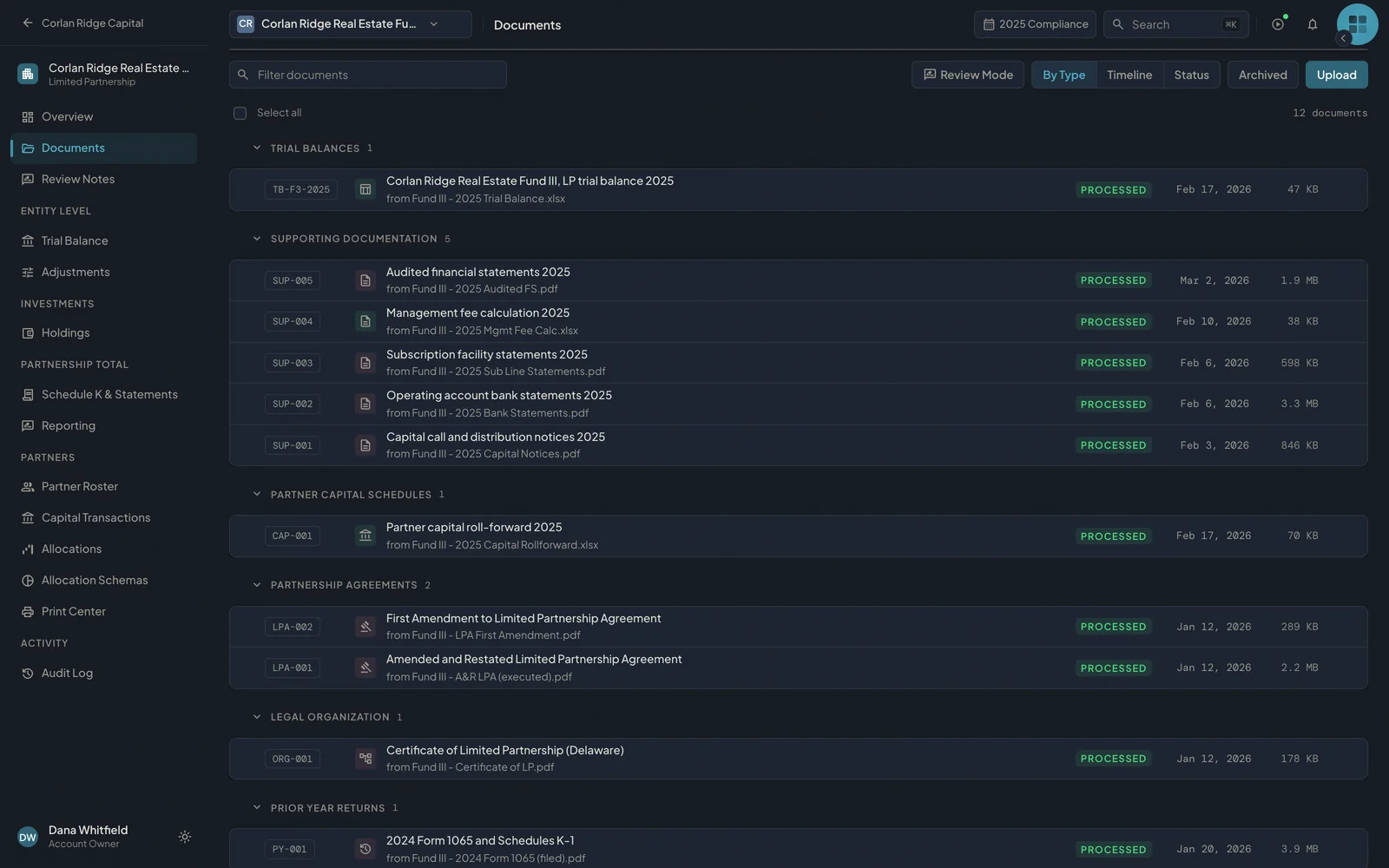
Workpapers in any format, standardized in Cascade
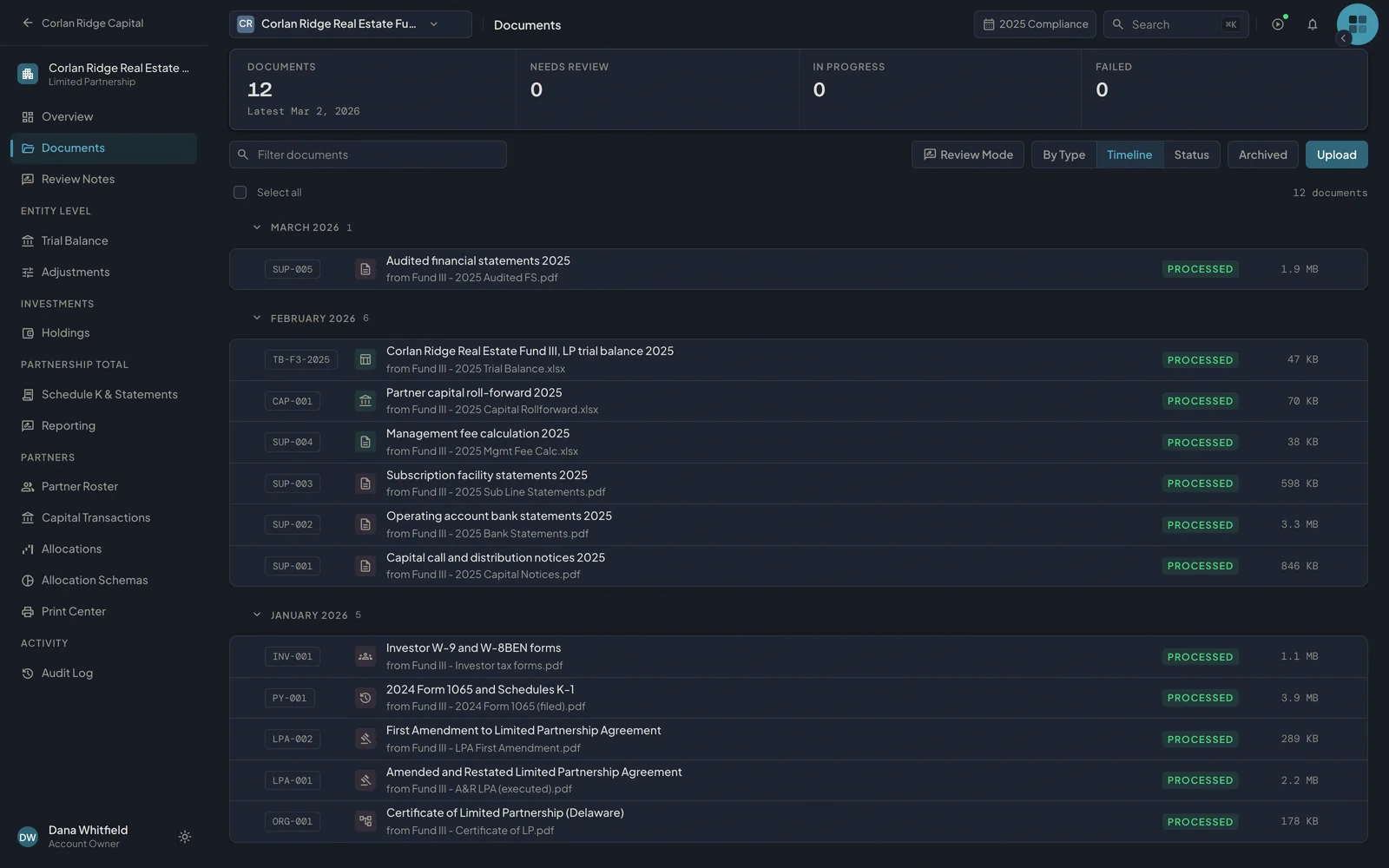
Prior-year returns, workpapers, trial balances, and agreements arrive in whatever format the client or the last preparer used. Cade reads each file and loads it into one standard structure, so a firm that has inherited different workpaper styles through acquisitions runs a single process.
Map the trial balance to the return
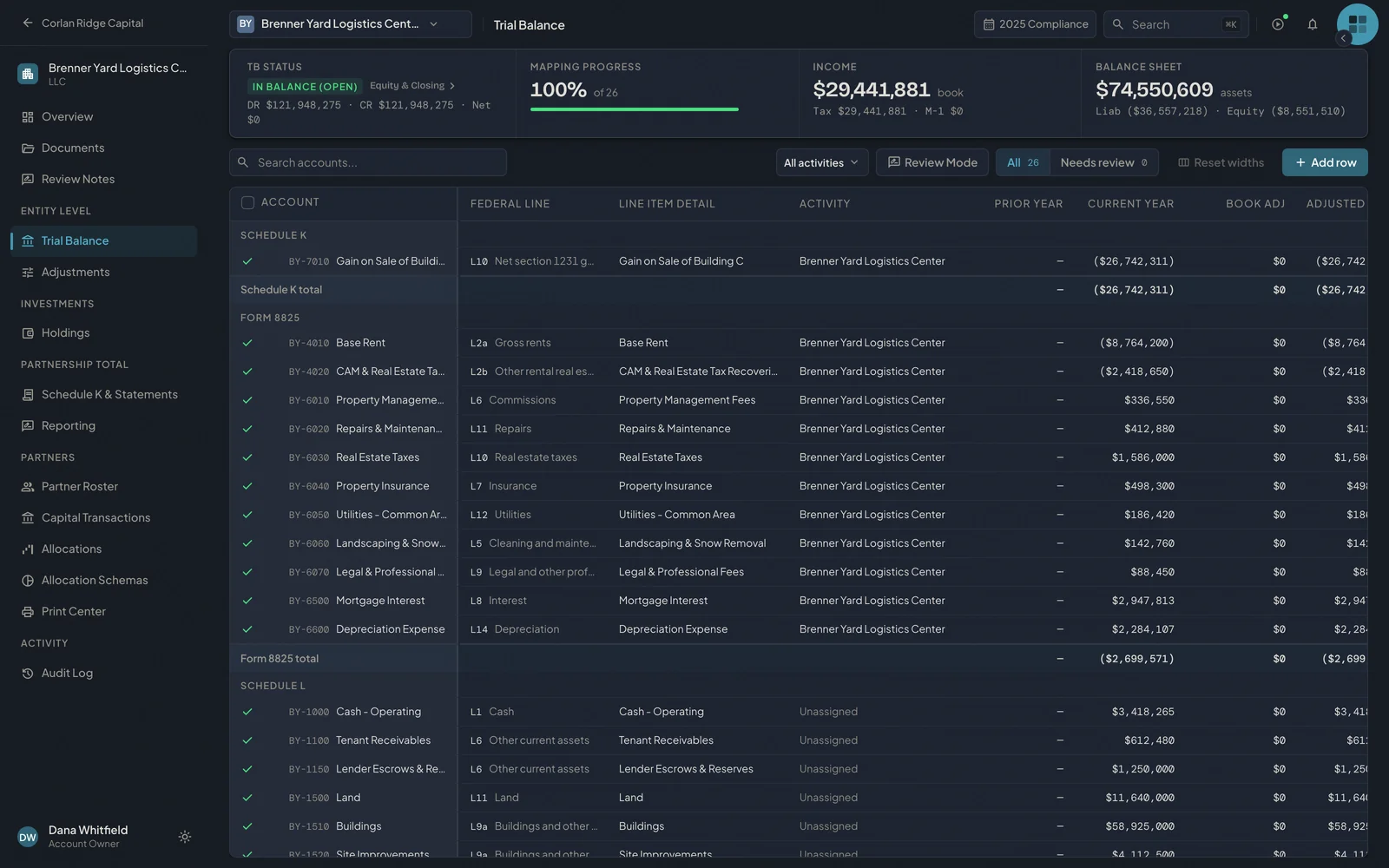
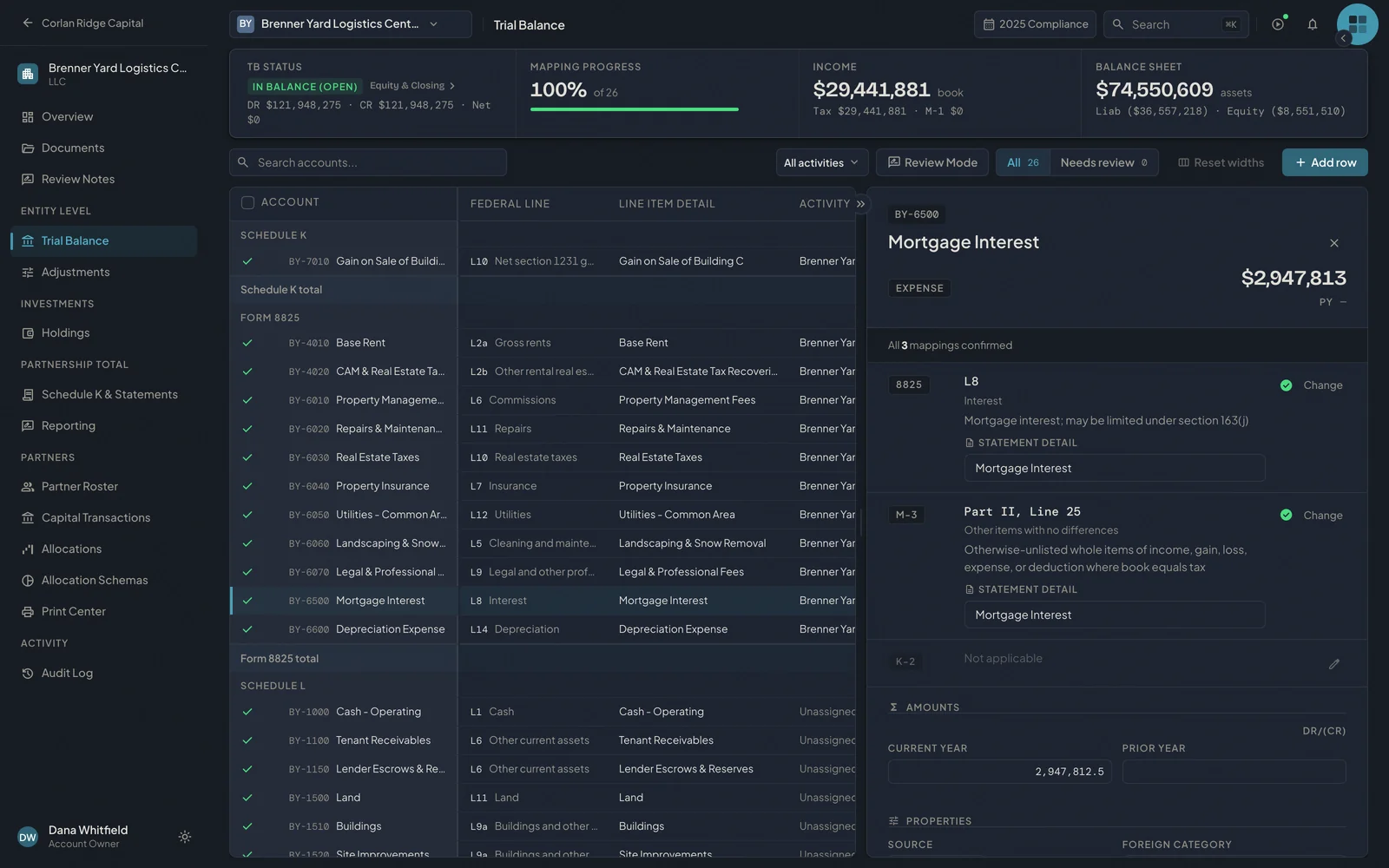
Each account maps to its line on the federal forms, including page 1, Schedule K, Schedule M-3, and Form 8825. That mapping drives the return, so every form and K-1 reads from it.
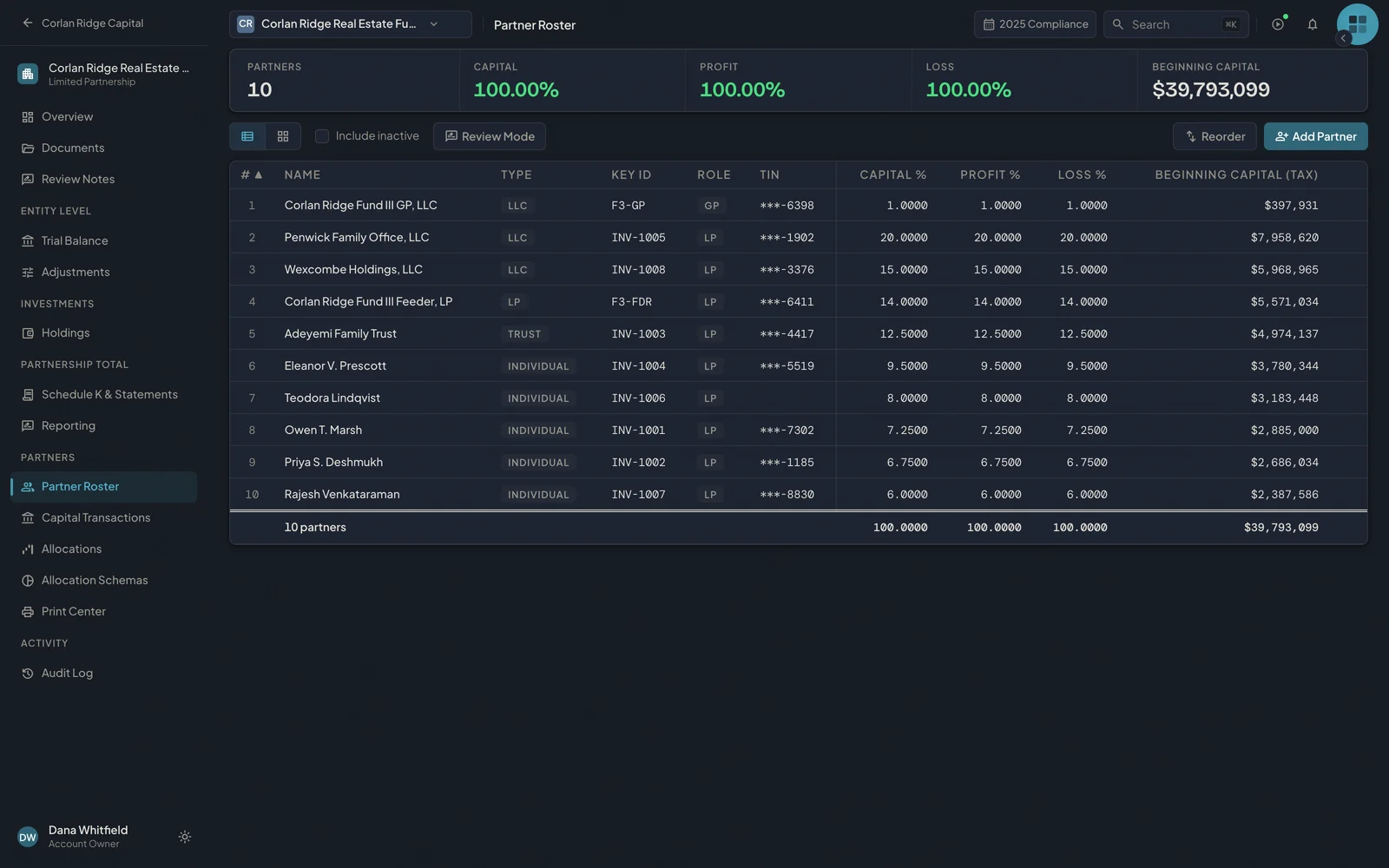
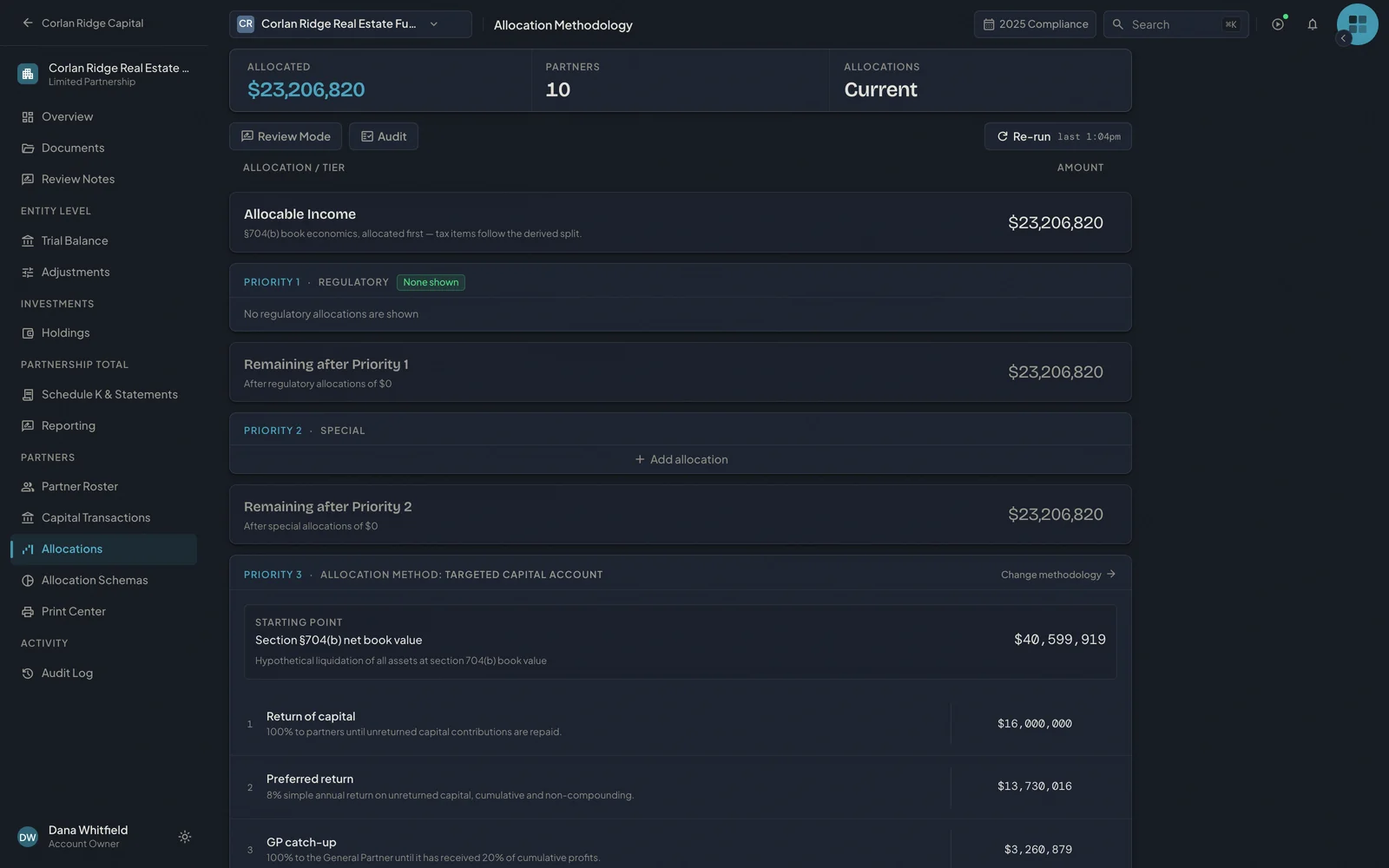
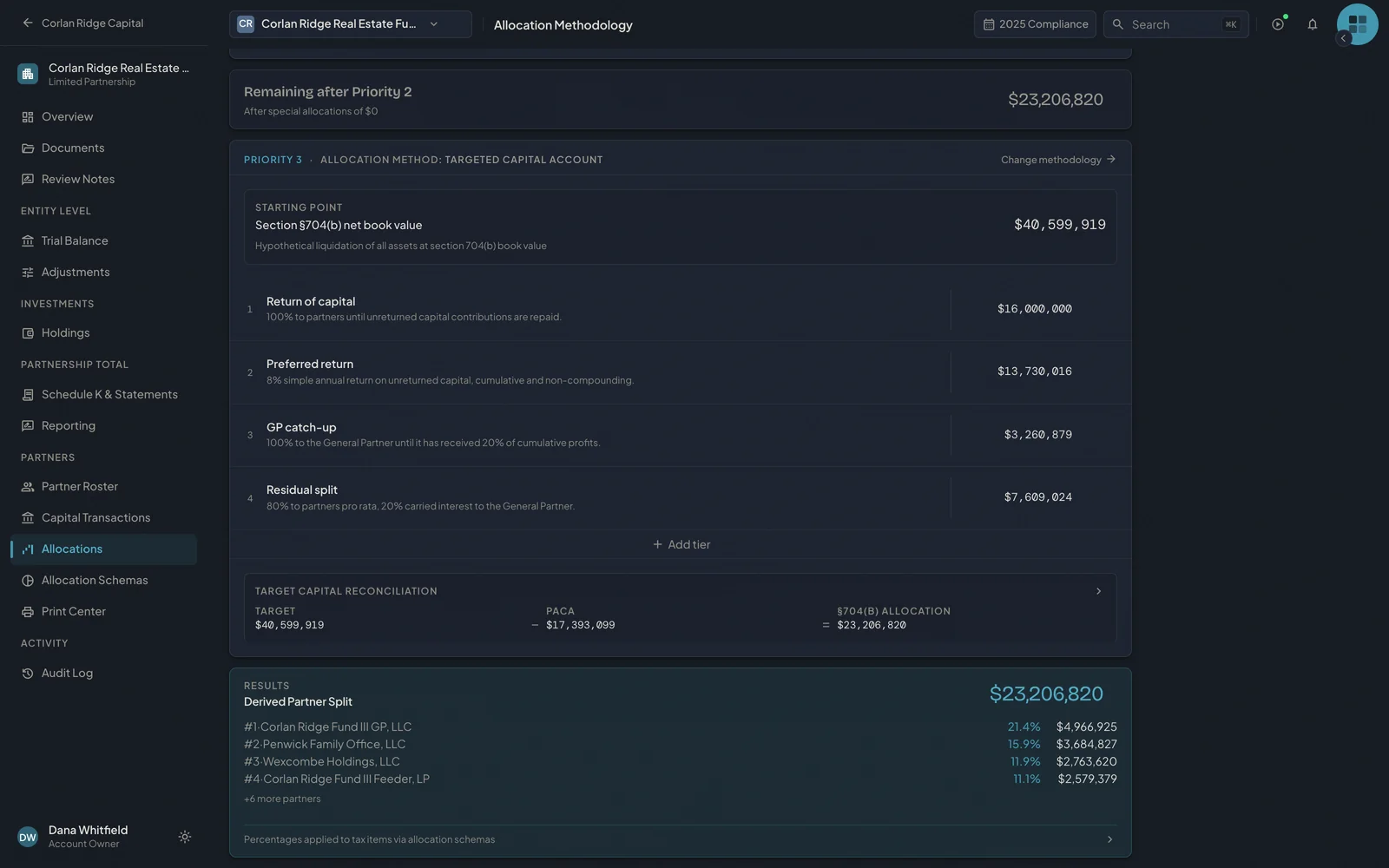
Allocations, from pro rata to target capital accounts
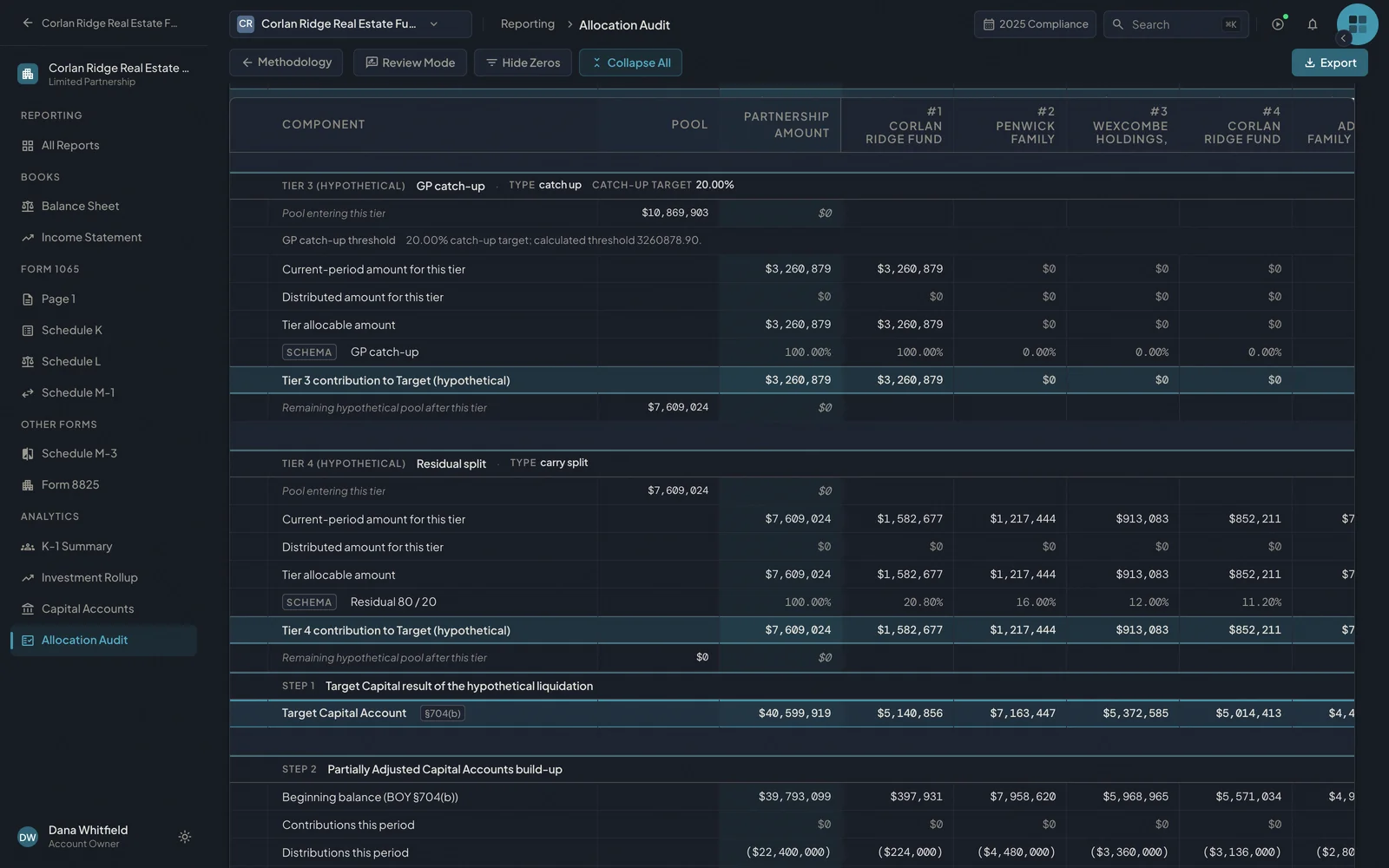
From a simple pro rata partnership to a target capital account allocation with a hypothetical liquidation. Set the method up from the partnership agreement or by hand, and Cascade derives each partner's share with every step shown.
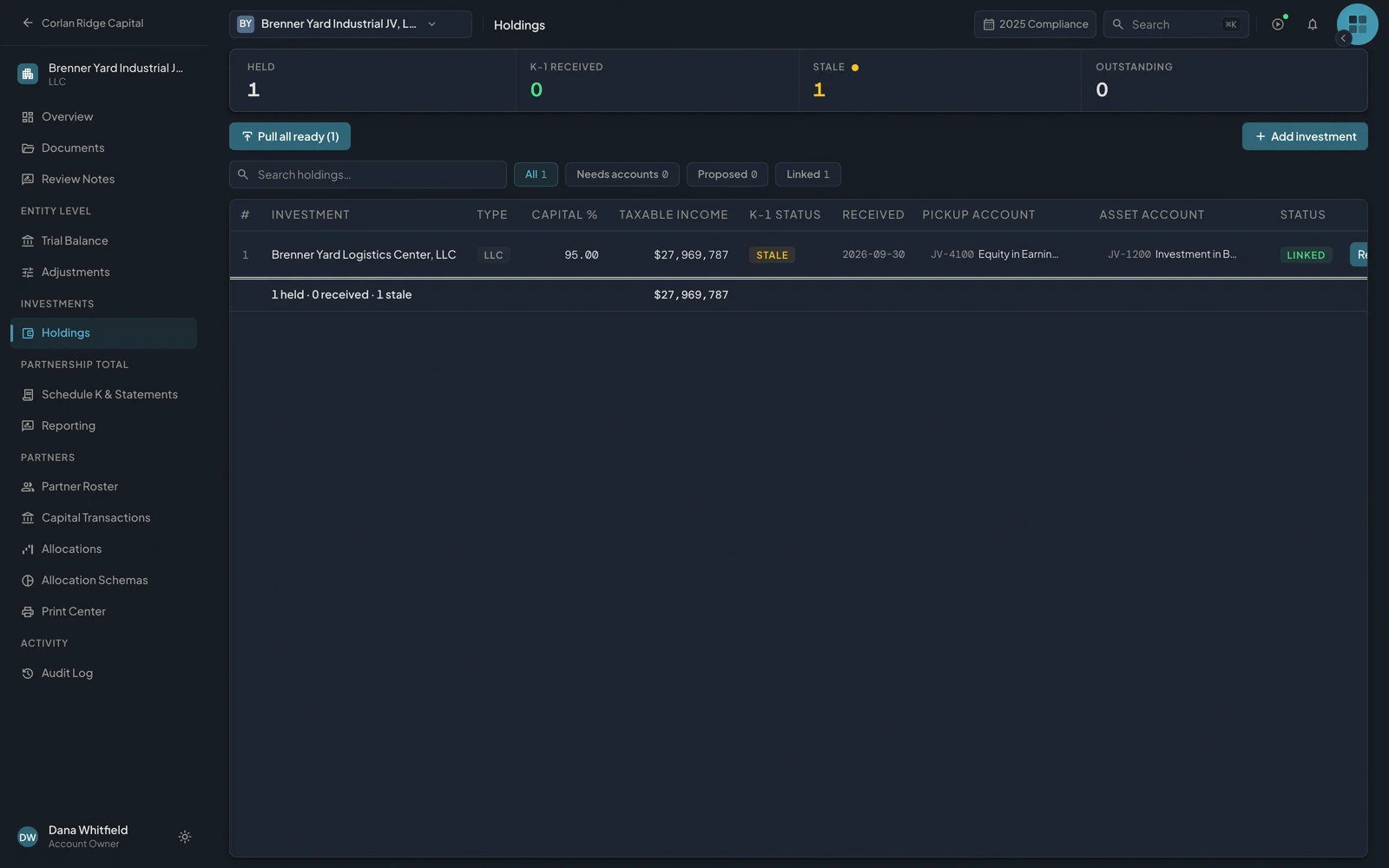
Change one number, and the tiers above update
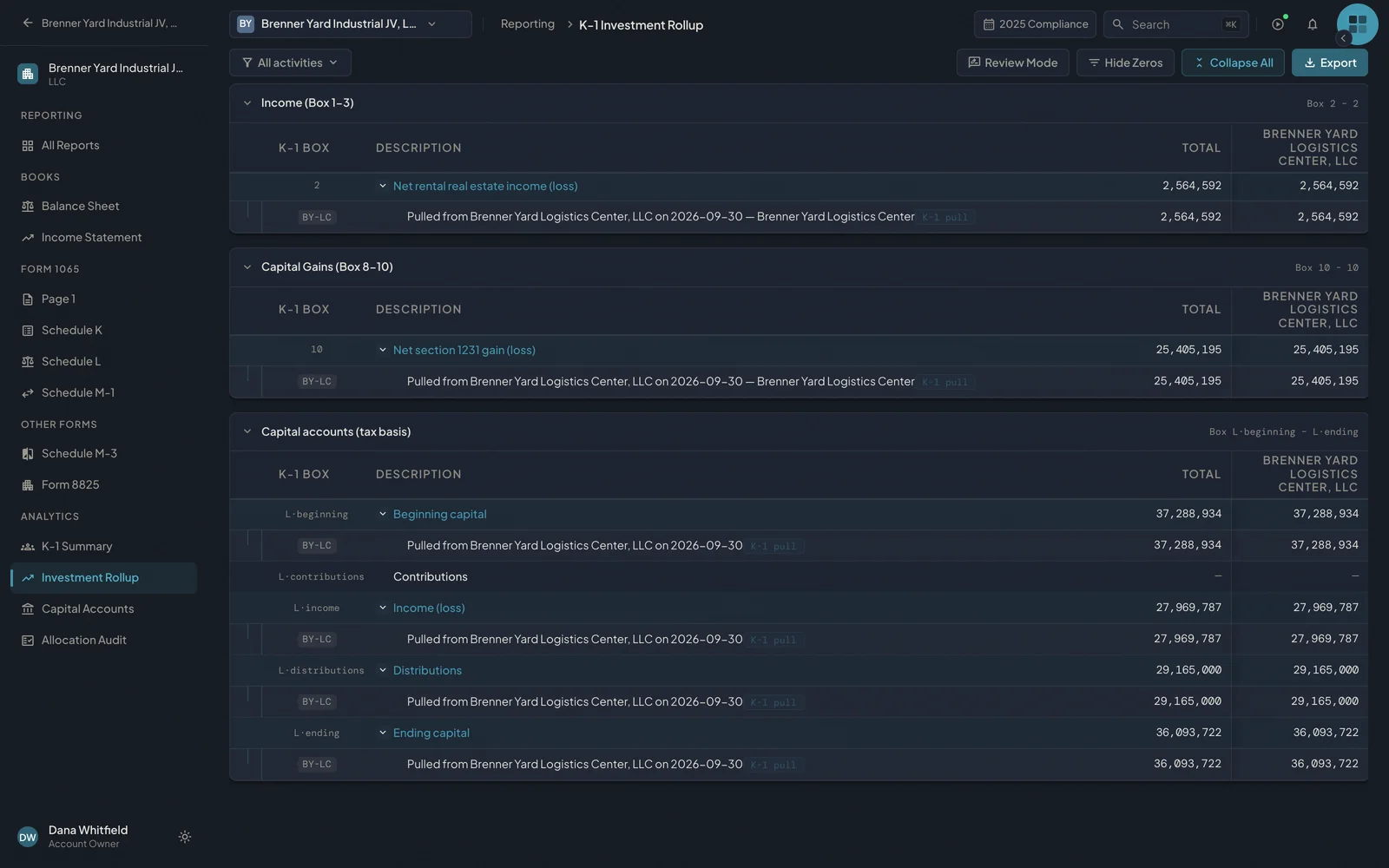
Lower-tier results flow up through every tier as data. When a lower tier changes, each tier above it is flagged and pulls the new figures in one step.
Capital accounts and K-1s that tie out
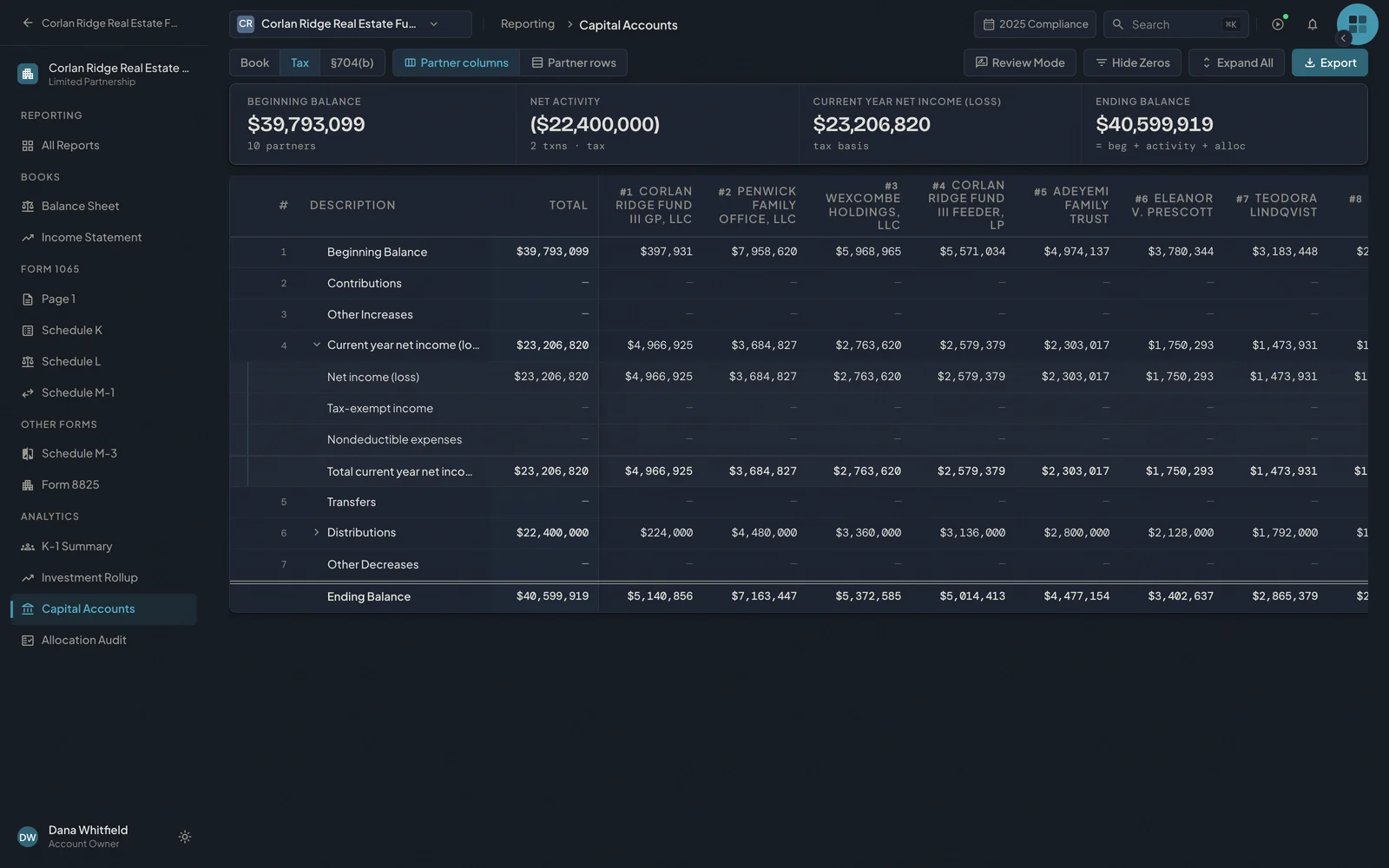
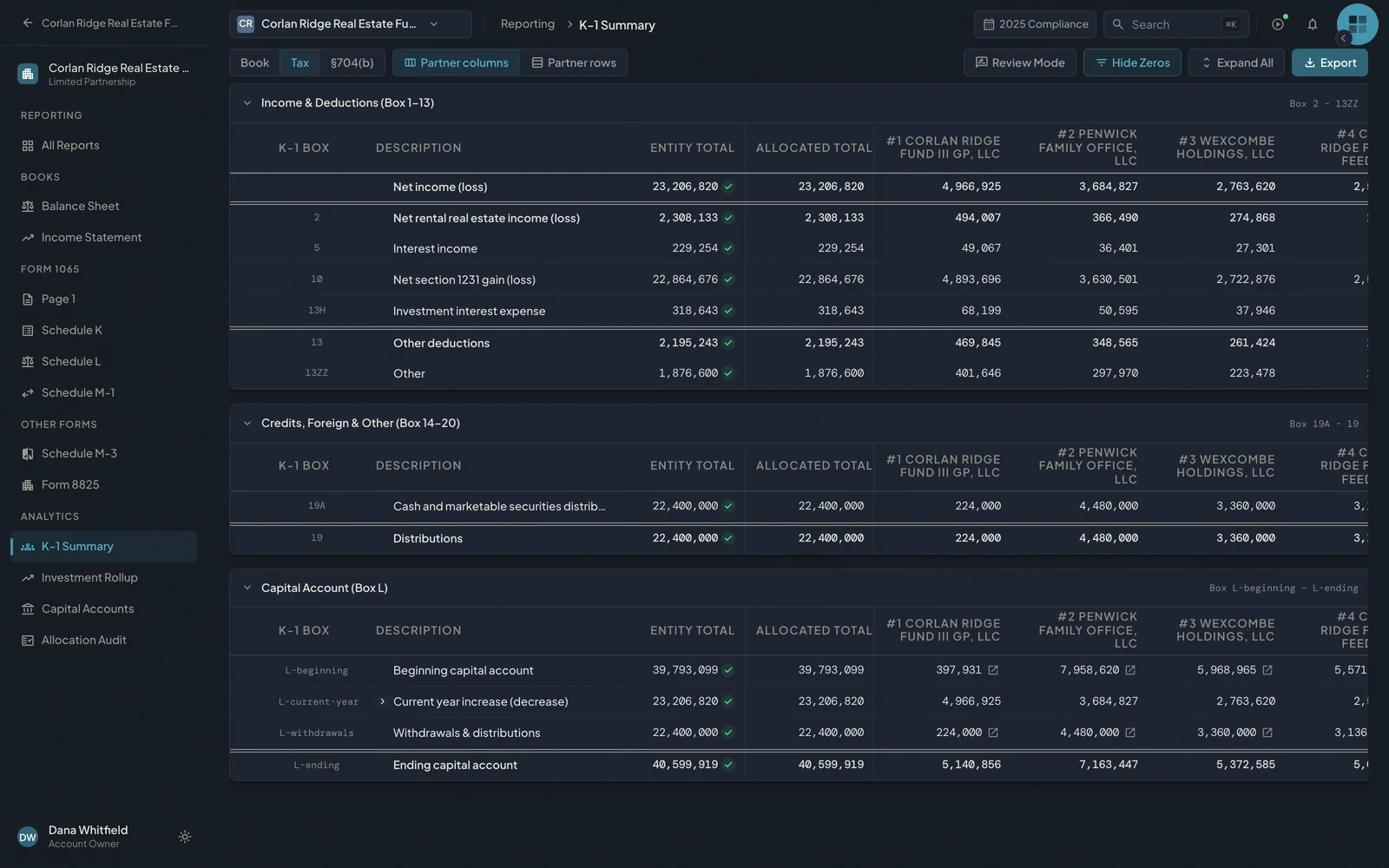
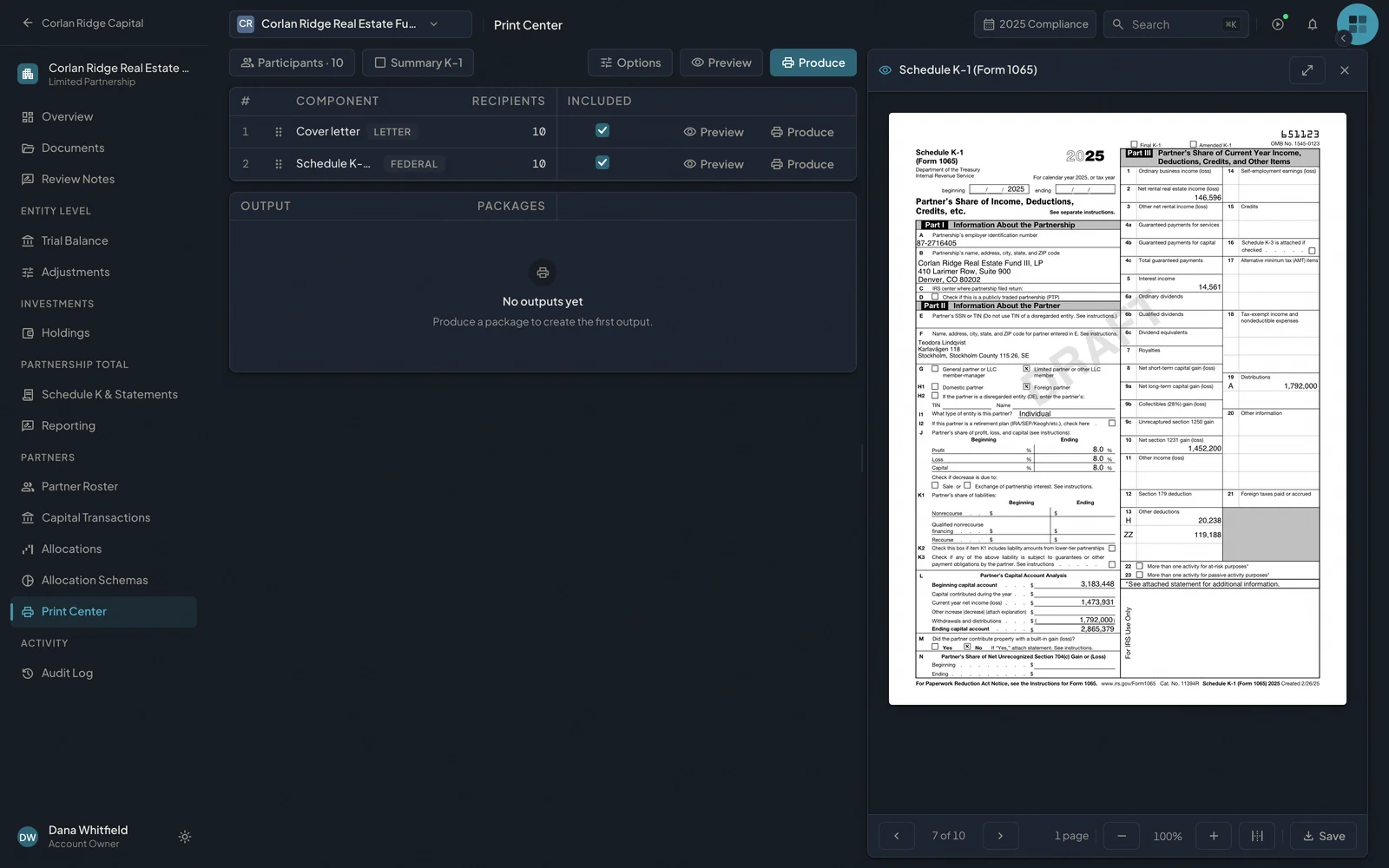
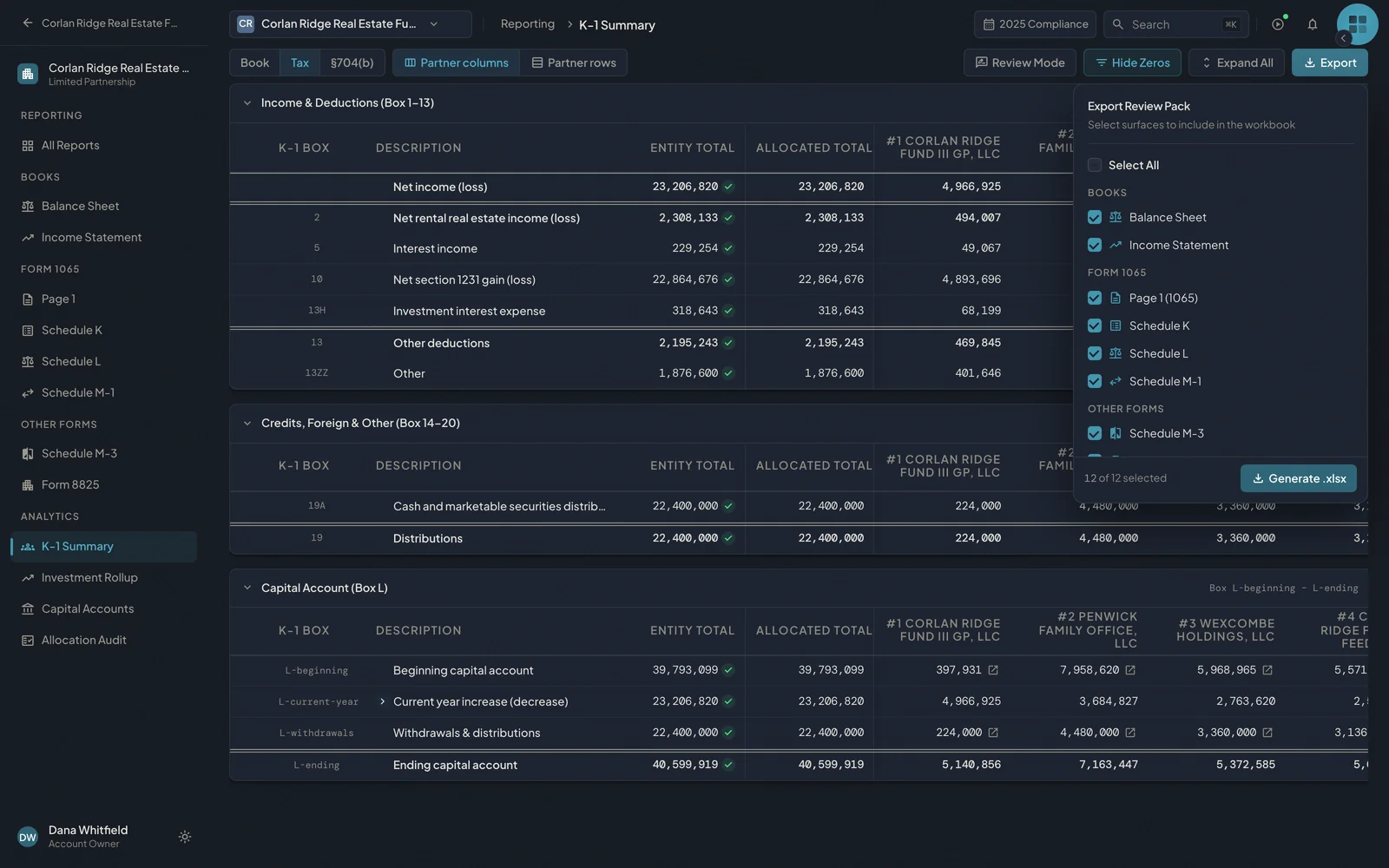
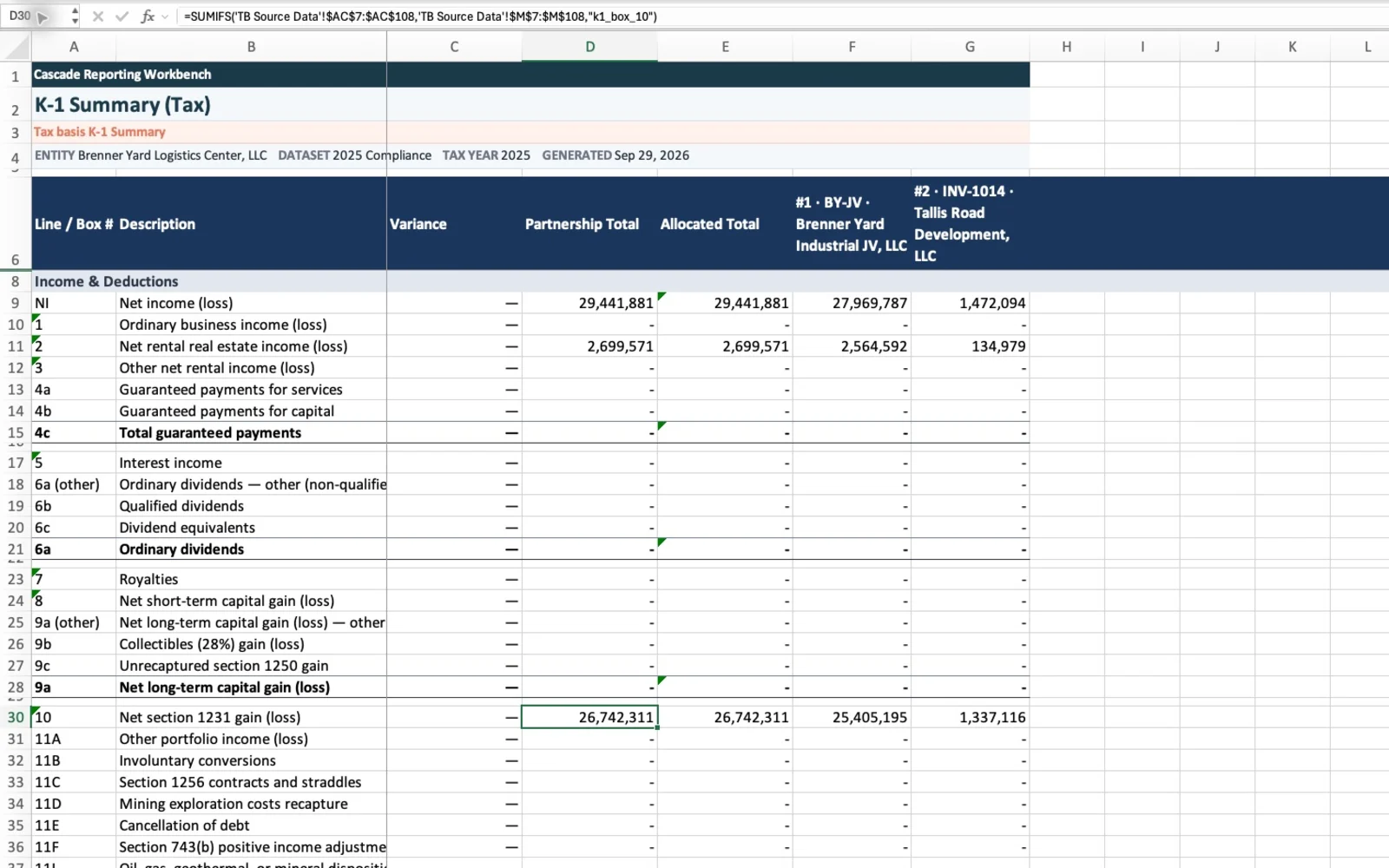
Capital account rollforwards and every K-1 box by partner, with entity totals checked against allocated totals. Cascade then produces PDF Schedule K-1s from the same data.
Review in the app, then make the final call
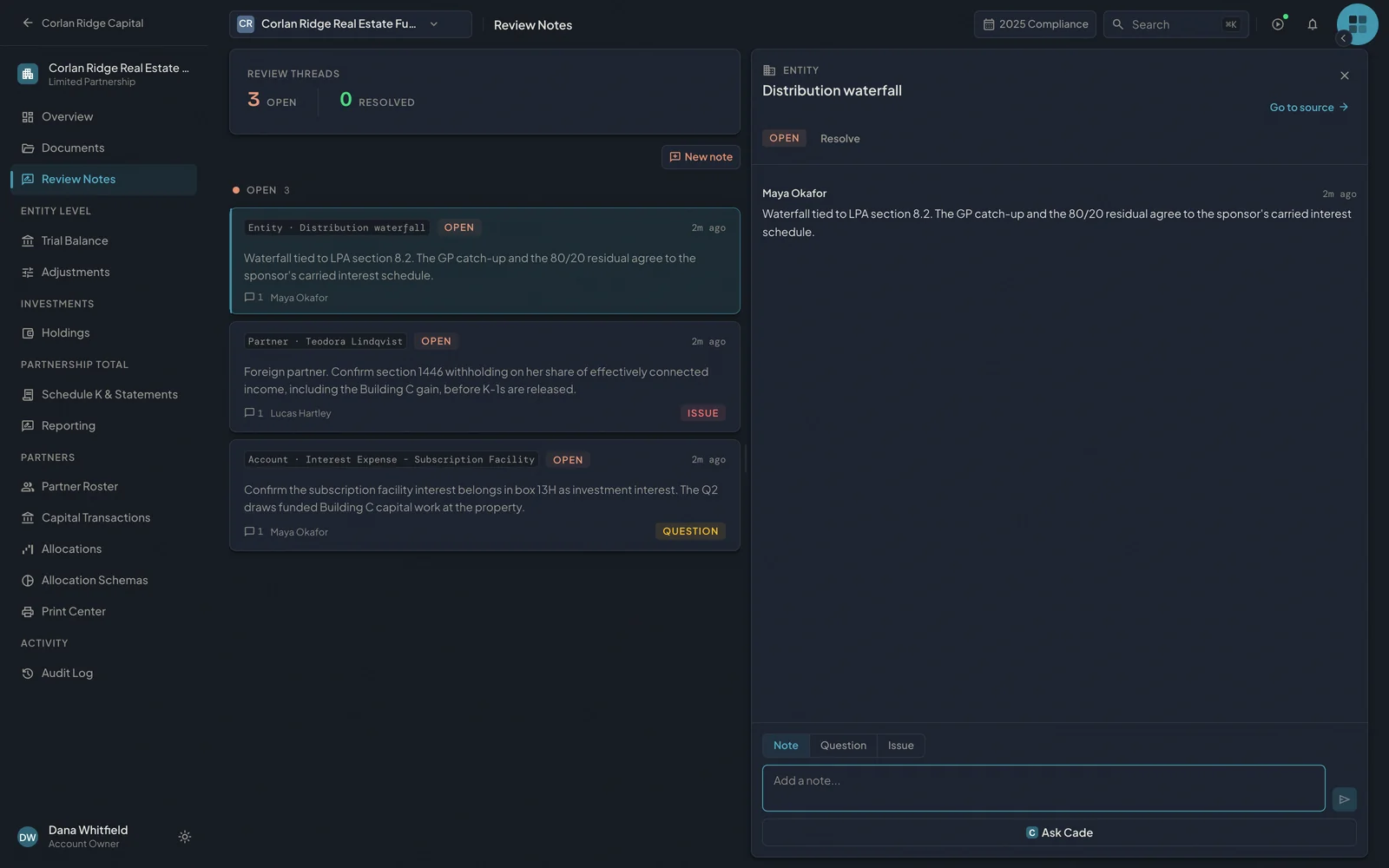
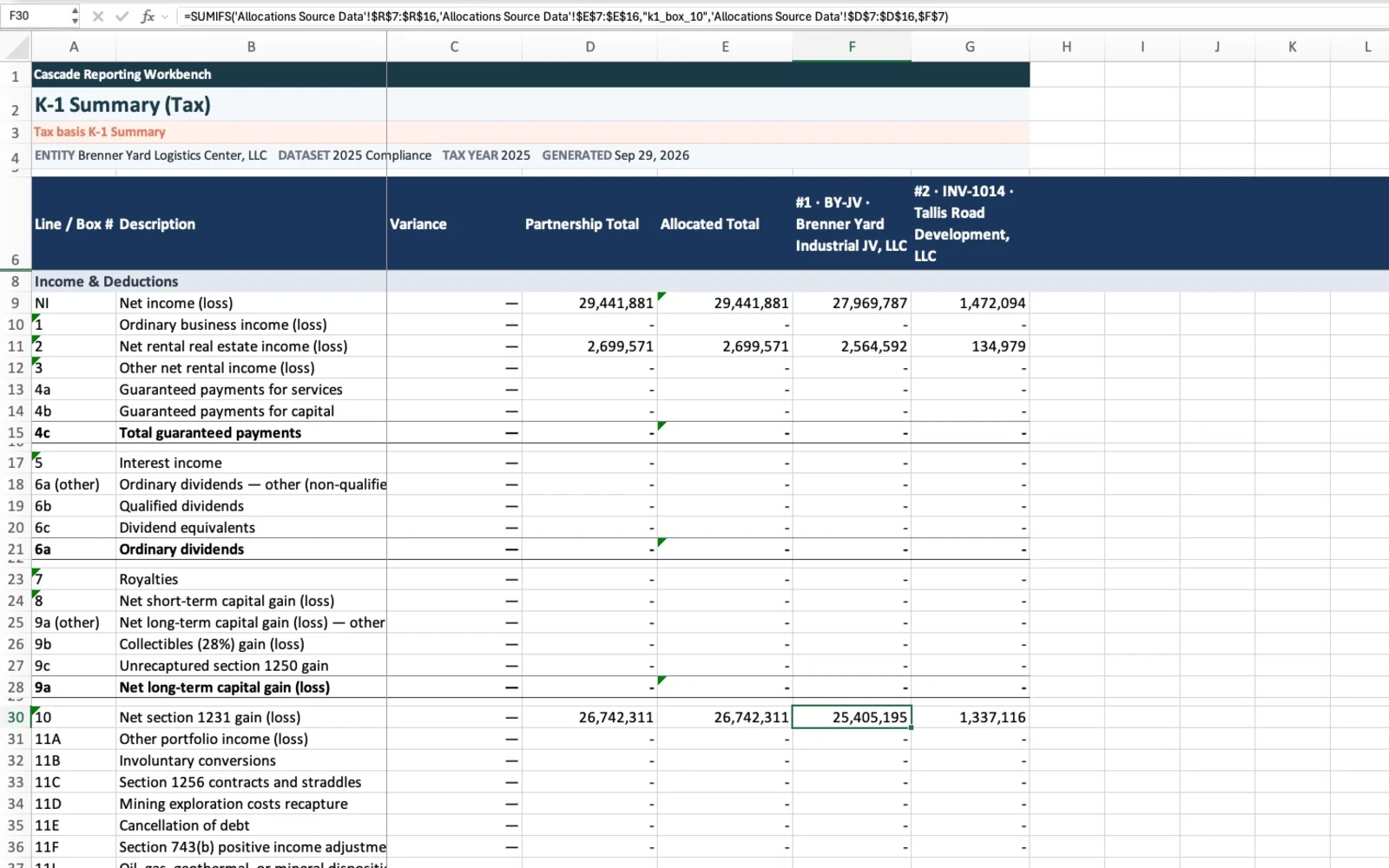
Review notes sit on the figure in question and stay open until a reviewer clears them. The Excel review pack keeps live formulas: each K-1 amount sums the partner’s allocation rows, and each partnership total sums the trial balance accounts behind it. When the return and the K-1s are ready, a practitioner signs off, and the entity is finalized.
Ready to see Cascade?
For accounting firms and tax teams at funds and family offices doing partnership tax work of any complexity across real estate, private equity, hedge funds, venture capital, and more.